Award-Winning College Math
Tutors
Who needs tutoring?
FEATURED BY


TUTORS FROM
- YaleUniversity
- PrincetonUniversity
- StanfordUniversity
- CornellUniversity
Award-Winning College Math Tutors

Certified Tutor
2+ years
Lukas
Linear algebra, multivariable calculus, differential equations — Lukas has worked through the full college math sequence as part of his Master's in computer engineering at Duke. He's particularly strong at showing how abstract proofs and computations connect to applied problems in engineering and co...
Duke University
Master's/Graduate

Certified Tutor
2+ years
William
In 2022, I completed my Ph.D. in Chemistry at Vanderbilt University. My goal is to use my expertise in chemistry, algebra, and calculus to help students not only learn but also enjoy these subjects. My favorite subject to teach is general chemistry as it highlights the importance of interdisciplinar...
Vanderbilt University
PhD
Delta State University
PhD

Certified Tutor
2+ years
Biomedical engineering at the undergraduate level and biophysics at Harvard for graduate work means Fernando has been continuously stress-testing college math — calculus sequences, differential equations, linear algebra, probability — for years without a break. That ongoing immersion makes him espec...
Johns Hopkins University
BS

Certified Tutor
2+ years
Marc
I firmly believe that the vast majority of students who believe they are "bad at math" have tragically internalized this identity without true justification. I have personally seen students of mine shed that persona and it is a special thing to witness.
Harvard University
Master's/Graduate
Certified Tutor
2+ years
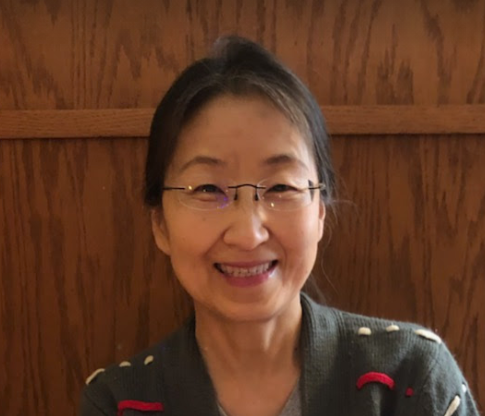
College-level math courses — whether it's linear algebra, statistics, or differential equations — move fast and assume fluency with fundamentals. Soung's doctoral training in molecular pharmacology required heavy quantitative modeling, so she brings real facility with the mathematical tools that und...
Northwestern University
DSC
University of Chicago
DSC
Certified Tutor
2+ years
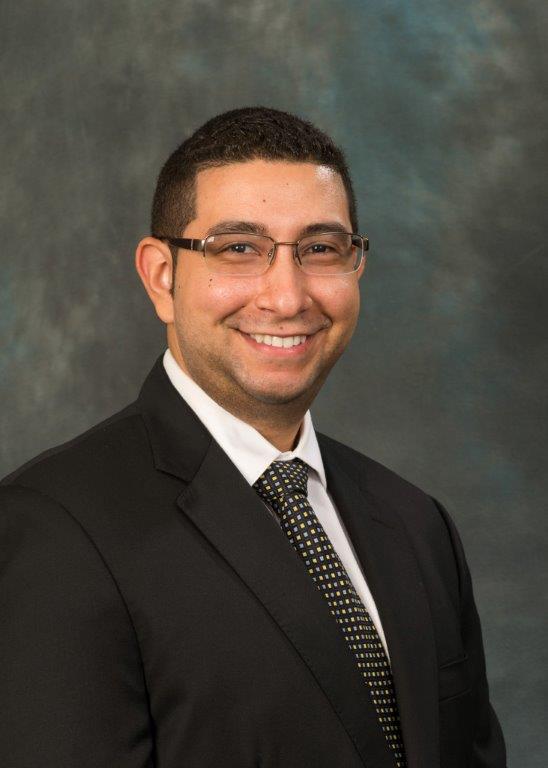
College-level math — whether it's linear algebra, multivariable calculus, or differential equations — moves fast and assumes fluency with foundational skills. Having taught across two universities and multiple STEM and business disciplines, Dariel knows how to diagnose exactly where a concept broke ...
University of Virginia Darden School of Business
MS
Florida International University
MS

Certified Tutor
2+ years
College-level math — whether it's linear algebra, differential equations, or multivariable calculus — often moves too fast for students to build real understanding in lecture alone. Robert earned his Master of Engineering from Johns Hopkins, where these subjects were daily tools, and he unpacks dens...
Johns Hopkins University
MNG

Certified Tutor
2+ years
Hi! My name is Carson. I graduated Cum Laude from Baylor University in 2018 with a degree in Russian (minors in math and physics) and I hold an Associates of Science from Big Bend Community College. I have been tutoring since 2013 at college, high school and middle school levels. I tutor all levels ...
Baylor University
AB

Certified Tutor
2+ years
Running a bilingual elementary school's science department in Ecuador meant Joy had to teach quantitative concepts — measurement, data analysis, proportional reasoning — across two languages, which forced her to strip every explanation down to its clearest possible form. Her biology and ecology trai...
Boston University
AB

Certified Tutor
2+ years
I am a graduate of the University of North Texas with a bachelor's degree in Psychology. I have completed Master's coursework and research in the field of Educational Psychology, with a focus in Gifted Studies. I tutor many subjects, but I really enjoy teaching various math courses, Advanced Placeme...
University
Bachelor's
Top 20 Math Subjects



Meet Our Expert Tutors
Connect with highly-rated educators ready to help you succeed.
Amal
Middle School Math Tutor • +9 Subjects
Through personalized, engaging instruction tailored to each student's unique journey, I am committed to inspiring learners reach their full potential.
Devra
Linear Algebra Tutor • +17 Subjects
I enjoy sharing my passion for math and helping people with their difficulties with it.
Dwight
AP Calculus AB Tutor • +10 Subjects
I am a graduate of the University of Missouri at Columbia, where I earned first my Bachelor's and then (some time later) Master's of Science in Mathematics with an emphasis on physics and the theory of computation. The latter degree was a necessary precursor to my next career where my workplace was the classroom: I don't believe in the importance of education because I teach; I became a teacher because I believe in the importance of education. Especially when trying to make informed decisions, as I came to realize in my first career as a data analyst. This I passionately believe; doubly so in matters where a certain fluency in the language of numbers is demanded.
Isabella
Pre-Algebra Tutor • +32 Subjects
I am a graduate of the University of California, San Diego. I received my bachelors of science in Cognitive and Behavioral Neuroscience. I graduated from University of Mississippi School of Medicine in 2025 and have my MD degree. I am currently a PGY-1 psychiatry and internal medicine resident at Emory University. While I tutor a wide range of subjects, I am most passionate about helping students develop stronger science and math foundations and grow confidence with standardized tests such as the ACT. I believe that anyone is capable of learning these subjects, and I enjoy finding new creative tutoring strategies that cater to each student's individual needs.
Dehlly
AP Statistics Tutor • +18 Subjects
I am here to assist you in any way I can to learn mathematics. I would like to call my sessions "Mathematics Without Tears"!
Alexis
Pre-Algebra Tutor • +18 Subjects
Personal Statement Mathematics is a very challenging discipline. In addition to it being challenging and demanding, it is also intimidating. Anyone who has ever spent hours working on math problems has learned to respect this area of specialty. Academia, however, is seeing an influx of students who enter each course wondering if that particular course will turn out to be the one that will derail their career dreams. Students are fully aware of the difficult task that lies before them and despite their best efforts they are still not successful. As a result, educators have the daunting task of identifying student's abilities, diagnosing and treating fear, in addition to teaching them the new material. A major component of my teaching philosophy deals with the fear component. Let me contest that I do not believe that students are lazy or incompetent but rather they are disgruntled and misinformed; that they somehow strayed away due to constant failures in mathematics. Failure can be constructive as long as it is dealt with quickly and by someone who knows the path to success. The problem is that this usually doesn't happen. Students typically work independently and without guidance. Students typically underestimate the time needed to learn the concepts needed; take too many complex courses while juggling a career and a family; but the greatest cause, in my opinion, is fear and anxiety, fear of not knowing where to begin and fear that their best efforts in the study process will still cause them to fail. As a result, students tend to avoid the issue altogether. As I am nearing my twentieth year as an educator, I am still dealing with this obstacle. There is no simple solution and I certainly will not devalue a student's education. Instead, I have felt that I should simply be honest about the task at hand. We as educators should make it clear that persistence is the key here and that there will be few chances at instant gratification. Mathematics is one of those courses that require a lot of investment in one's time and energy before results are shown. My convictions on mathematics and education in general are that people will always fear what they do not understand. It is the responsibility of the instructor to reduce that fear by presenting the material in such a way that students can understand and ultimately build confidence. All of these things can be done without compromising the goals of the course. Awareness on the part of the student will help immensely in eliminating the fear of mathematics. It is with this charge that I took up a career in education. I wanted a career that would allow me to assist students in becoming exceptional communicators, logical thinkers, and independent learners. By collaborating with students in their own education, we together can bring about successful mathematics instruction and enlist in students a feeling of pride, enjoyment, and appreciation of mathematics.
Rene
Applied Mathematics Tutor • +27 Subjects
PhD Mathematics. Undergrads in Physics and Maths. Duke University and NYU alumni.
Yosef
AP Statistics Tutor • +30 Subjects
Hello, my name is Yosef and I would be happy to serve as a math tutor. I place strong emphasis on a good balance between knowledge of mathematical content and proficiency in problem-solving, reasoning, and conveying mathematical ideas in writing. There are times when a student needs to be informed of a solution, times when he or she also needs to hear the explanation of why the solution works, and times when he or she should be guided to finding the solution on his or her own. It is important for the tutor to recognize which approach is appropriate. Frequently, when students struggle, it is because they do not understand the notation or terminology in use. In such cases, it is important to reassure the student, reminding him or her that he or she is only struggling with understanding a single word, not the entire mathematical concept. As a rule, people perform better and are better motivated when they have self-confidence, not when the task ahead seems frighteningly daunting. It is also important to recognize that different students learn best through different means. As an example, some students are visual learners and can understand the material best through pictures and gestures. Other students learn best through hearing the procedures vocalized, while still others learn best through writing out the steps of the solution procedure. I know to adapt my teaching style to the individual student. with these considerations in mind, I promise to provide the best assistance that I can, taking your individual needs into consideration.
Joel Mauricio
College Algebra Tutor • +14 Subjects
I love tutoring because it allows me to make a direct and meaningful impact on someone's learning journey. There's a unique satisfaction in helping students grasp complex concepts and watching their confidence grow as they overcome challenges. Tutoring not only allows me to share my knowledge, but it also helps me refine my communication skills, as I must adapt my explanations to meet each student's individual needs. I find great fulfillment in fostering a positive, supportive learning environment where students feel encouraged to ask questions, make mistakes, and ultimately succeed. The personal connection formed through tutoring, combined with the opportunity to inspire a love for learning, makes it an incredibly rewarding experience.
Aaya
Applied Mathematics Tutor • +38 Subjects
As a former IB student, my love for knowledge runs deep. I majored in Biomedical Engineering at the University of Alabama at Birmingham, graduating in December 2015 with honors (BME honors and Science and Technology Honors program) and going on to earn a Master's degree in Management Information Systems from the same university in 2019. I am currently pursuing a Master of Engineering in Artificial Intelligence and Machine Learning from the University of Illinois at Chicago and hope to start a career in data science and analytics. I greatly enjoy helping others learn and tutored throughout high school and college; I love seeing the light flash on in a student's eyes when they finally understand something they had been struggling with or when they easily solve a problem. I have tutored both young children as well as high school and college students, in just about every subject. I particularly enjoy language tutoring; I am fluent in Arabic and French and I love literature and poetry. I also love to tutor math and science subjects. My tutoring style is very much student-first; I listen and observe to determine the best approach for each individual student and what methods or strategies will be most helpful for you specifically. I am not averse to making a fool of myself with song or dance if it will help! I enjoy what I do and I want the students I work with to enjoy learning as well.
Top 20 Subjects
Frequently Asked Questions
College Math requires a shift from memorizing procedures to understanding underlying concepts and why methods work. Students often struggle because they've relied on formula application rather than developing mathematical reasoning. A tutor can help bridge this gap by teaching you to recognize patterns, understand the logic behind theorems, and apply concepts flexibly across different problem types—skills essential for success in calculus, linear algebra, and beyond.
Word problems require translating real-world scenarios into mathematical language—a skill separate from computation. Effective strategies include identifying what's being asked, defining variables clearly, breaking multi-step problems into manageable chunks, and checking whether your answer makes sense in context. A tutor can teach you to visualize problems through diagrams or tables, recognize problem types you've seen before, and develop a systematic approach so word problems feel like puzzles to solve rather than obstacles.
Proofs require logical thinking and the ability to justify every step—a significant jump from plugging numbers into formulas. Many students struggle because they don't see how to start or what counts as valid reasoning. A tutor can show you proof structures (direct proof, contradiction, induction), help you identify what you know versus what you need to prove, and guide you through working backwards from the conclusion. Over time, you'll recognize common proof patterns and develop confidence in mathematical argumentation.
Graphing connects abstract equations to visual representations, helping you see relationships between variables and understand behavior across different domains. Many students skip this step and miss crucial insights—like why a function has asymptotes or how parameters affect a curve's shape. A tutor can teach you to sketch graphs by hand (not just use calculators), interpret key features like intercepts and slopes, and move fluidly between equations, graphs, and real-world interpretations. This visual literacy strengthens your overall mathematical understanding.
In College Math, showing work demonstrates your reasoning process and helps instructors identify where misunderstandings occur—partial credit often depends on it. More importantly, writing out steps forces you to organize your thinking and catch errors before they compound. A tutor can help you develop clear mathematical communication: explaining why you chose a method, labeling steps logically, and justifying your reasoning. This habit builds deeper understanding and prepares you for upper-level courses where conceptual clarity matters more than computational speed.
Multi-step equations require maintaining order of operations, tracking variables across steps, and avoiding algebraic errors that compound—one mistake early on ruins the entire solution. Common pitfalls include distributing incorrectly, losing negative signs, or forgetting to apply operations to both sides of an equation. A tutor can slow down the process, help you check your work at each stage, teach you to estimate what a reasonable answer looks like, and build pattern recognition so you spot your typical errors before they happen. This develops both accuracy and mathematical confidence.
Math anxiety often stems from past struggles, rushed learning, or feeling lost in class—and it genuinely impairs your ability to access knowledge you actually have. A tutor creates a low-pressure environment where you can ask questions without judgment, work through problems at your own pace, and gradually build confidence through small wins. By understanding concepts deeply rather than memorizing procedures, you develop a sense of control and mastery. Regular practice with feedback also reduces test anxiety because you've solved similar problems before and know you can handle them.
Yes—different textbooks emphasize different approaches (some focus on graphing first, others on algebra), and your professor may have specific expectations about notation, proof style, or problem-solving methods. A tutor familiar with your course can align instruction with what your professor expects, help you navigate your textbook effectively, and ensure you're building skills in the order your course requires. When connecting with a tutor, sharing your syllabus and textbook information helps ensure you get support tailored to your exact course structure.
Connect with College Math Tutors
Get matched with expert tutors in your subject